For Foreign-Born Patients and Doctors, Immigration Fears Become a Barrier for Care
By Erika Gonzalez and Noemi Castanon
Photography By Noemi Castanon
Reporting Texas
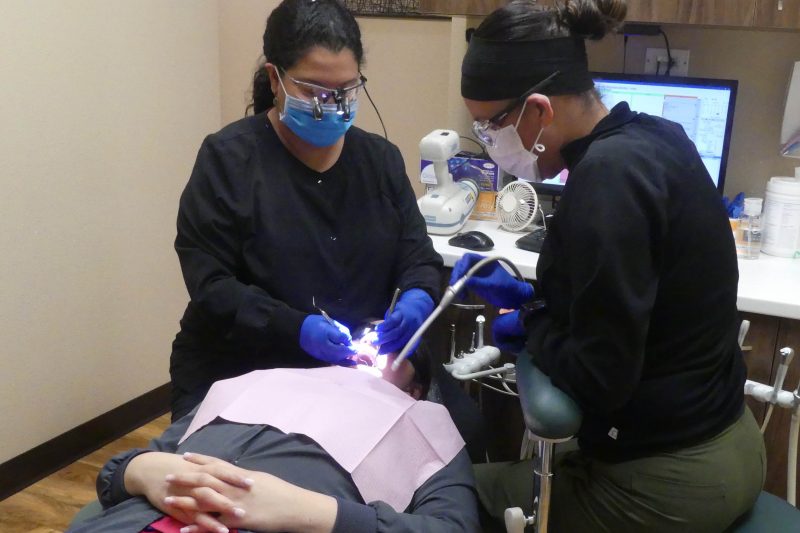
Round Rock dentist Maria Teresa Rodriguez says immigrants needing dental care are increasingly avoiding professional care because of fears of being exposed to immigration enforcement. Noemi Castanon/Reporting Texas
In a dental clinic surrounded by Latino grocery stores and restaurants in Round Rock, Dr. Maria Teresa Rodriguez began noticing something different among her patients.
The Dominican dentist, known to patients as Tere, has lived in Texas for more than a decade and spent the past eight years running her own clinic in a community where many of her patients are Latino immigrants.
A few months ago, a Venezuelan delivery driver arrived at the clinic with a food order. Before leaving, he stood near the front desk for a few seconds and asked a question.
“Do you pull teeth here?”
Rodriguez told him yes. Depending on the case, the procedure could cost around $300.
Then the man told her something she still remembers clearly. He had spent days trying to endure the pain before going to a clinic. When it became unbearable, he heated a wire and tried to burn the nerve in his tooth himself at home.
The dentist was stunned.
Over the years, she said, she has heard many difficult stories inside her clinic. But she has begun noticing more patients arriving with advanced infections after avoiding clinics for weeks, people trying to pull out their own teeth at home and families terrified of filling out basic medical forms because they fear it could affect their immigration status.
“People are coming in extremely scared,” Rodriguez said. “And when people are afraid, they stop doing things they never should stop doing.”
Doctors, community clinics and public policy experts say the United States’ increasingly restrictive immigration climate and recent federal changes in public health insurance programs are affecting both immigrant patients and foreign-born physicians working here.
Some immigrant families are delaying medical appointments, avoiding public health programs or abandoning treatment, fearing it could expose them to immigration authorities and lead to deportation, according to doctors interviewed for this story. Foreign-born doctors are also facing growing uncertainty in their visas, work permits and residency stability.
Experts warn the effects could extend far beyond immigrant communities.
Texas has one of the highest uninsured rates in the country and remains one of the few states that has not expanded eligibility for Medicaid under the Affordable Care Act. According to data from KFF, nearly 50% of adults living in the United States without legal status are uninsured, compared with less than 10% of U.S.-born citizens. At the same time, the Association of American Medical Colleges projects the U.S. could face a shortage of up to 86,000 physicians by 2036 as the American population ages.
Now, doctors and policy experts say immigration fears and uncertainty surrounding public insurance programs are placing even more pressure on a health care system that was already struggling with inequalities.
Immigrant Doctors’ Role in U.S. Health Care
Andrea Caracostis has spent decades working with immigrant communities in Texas. She also knows the challenges of the U.S. immigration system personally.
The director of HOPE Clinic immigrated to the United States from Bolivia about 10 years ago. Today, she leads one of Houston’s best-known community clinics, serving patients from Afghanistan, Syria, Iran, Somalia, Vietnam and several Latin American countries.
Many of those patients are looking for more than medical care, Caracostis said.
“They want to find doctors and staff who understand their language but also their culture,” she said.
The clinic provides pediatric, prenatal, gynecological, dental, mental health and pharmacy services in one location so that patients won’t need to travel to multiple medical centers.
Caracostis said foreign-born physicians are increasingly worried that U.S. immigration policy changes could affect their legal status and ability to practice here.
“Many of our doctors are immigrants,” she said. “And they’re helping sustain a system that already has staffing shortages.”
For years, HOPE Clinic has sponsored visas for foreign medical professionals, especially in areas with physician shortages and where patients need care in languages other than English. In many underserved Texas communities, foreign-born physicians help fill critical staffing gaps.
Caracostis said the current immigration climate is creating anxiety even among professionals legally working in the country.
“It’s discouraging,” she said, “especially when we’re talking about people who have contributed so much.”
Rodriguez said she has seen those fears inside her own family.
She said one of her cousins, a pediatrician working in California on a work visa, now avoids flying because she fears potential immigration problems at airports.
“She doesn’t want to go through an airport,” Rodriguez said. “And she’s here legally.”
The dentist also said she knows Latin American doctors and dentists who cannot practice in the United States because they do not hold U.S. licenses.
Some eventually begin working underground.
‘People Are Afraid to Ask for Help’
Caracostis said she has noticed growing fear among immigrant patients about using public insurance programs or government-funded health services.
“People are afraid to ask for help,” she said, “or putting family members at risk who are trying to fix their immigration status.”
Caracostis said some families are avoiding Medicaid or children’s health programs because they believe it could hurt future immigration applications or affect relatives trying to legalize their status.
“There’s a chilling effect,” she said, using a term experts often use to describe people avoiding services because of fear tied to possible immigration consequences.
Although HOPE Clinic has not seen a dramatic drop in patients, Caracostis said the clinic noticed uncertainty growing during the first months of the year.
She also said many immigrant families already face enormous financial pressure.
“A lot of people are paid by the hour,” she said. “Every time they miss work to go to the doctor, they lose money.”
For many families, she said, immigration fears have become another barrier inside a health care system that was already difficult to navigate.
Drishti Pillai, director of immigrant health policy at KFF Health News, said many immigrant families are avoiding public health programs because of immigration-related fears.
“We are seeing more immigrants deciding not to apply for public programs because of immigration concerns,” she said.
Medicare and Medicaid Changes Increase Uncertainty
Recent federal and state Medicaid verification policies, including increased reviews of citizenship and immigration records, have added uncertainty for some immigrant families and people with temporary legal status. Additional documentation requirements and concerns about how immigration information could be used have discouraged some people from seeking coverage or medical care.
Akash Pillai, a health policy researcher at KFF who studies Medicaid and immigrant health coverage, said much of the public debate contains misinformation about who actually qualifies for federal programs such as Medicare and Medicaid.
“Undocumented immigrants are already not eligible for federal Medicare or Medicaid,” she said. “That’s one of the biggest misunderstandings.”
But recent federal restrictions could affect immigrants who are legally present in the country.
Pillai said refugees, asylum-seekers, work visa holders and people with temporary protected status could lose access to some public insurance programs depending on new federal rules.
“Many of these individuals have contributed to the system for years through taxes,” he said. “But they could still lose eligibility depending on their immigration category.”
Experts estimate that roughly 1.4 million legally present immigrants could lose health coverage under the new federal changes.
Underground Clinics
Inside her clinic in Round Rock, Rodriguez said that fear is pushing some patients into increasingly dangerous situations.
“I’m seeing a lot of illegal dentistry,” she said. “Patients come in with infections, broken teeth or badly done procedures.”
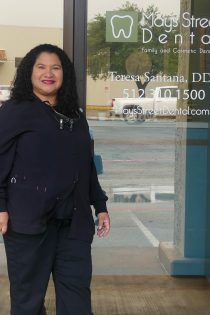
Dr. Maria Teresa Rodriguez says her Round Rock dental clinic accepts identification documents issued by other countries and offers free emergency exams for patients in severe pain. Noemi Castanon/Reporting Texas
According to Rodriguez, some patients turn to underground clinics because they believe regular medical offices will ask for immigration documents or share information with authorities.
“It’s not just misinformation,” she said. “It’s desperation.”
Rodriguez said many people still do not understand how the health care system actually works.
Her clinic accepts identification documents issued by other countries and offers free emergency exams for patients in severe pain after receiving repeated calls from people asking how much it would cost just to be evaluated.
“A lot of people don’t even have $100 for a consultation,” she said.
She also said she has started seeing more immigrant children, especially from Venezuela and Cuba, some arriving after years without dental care.
Rodriguez recently treated a 5-year-old Cuban boy with multiple infections after his family spent years moving between countries before arriving in the United States.
She said many patients wait until the pain becomes unbearable before seeking help.
“They wait and wait because they think nobody is going to treat them,” she said.
Outside the clinic, Spanish-language businesses continue filling the streets of Round Rock. Inside, Rodriguez said she hears new stories every week about people trying to endure pain because they are afraid to ask for help.
“When people become too afraid to seek medical care and doctors become too afraid about their future, fear stops being an immigration issue,” she said. “It becomes a public health issue.”