With New Precautions, Bastrop State Park Plans Another Prescribed Burn
By Paul Holm
Photography By Paul Holm
Reporting Texas
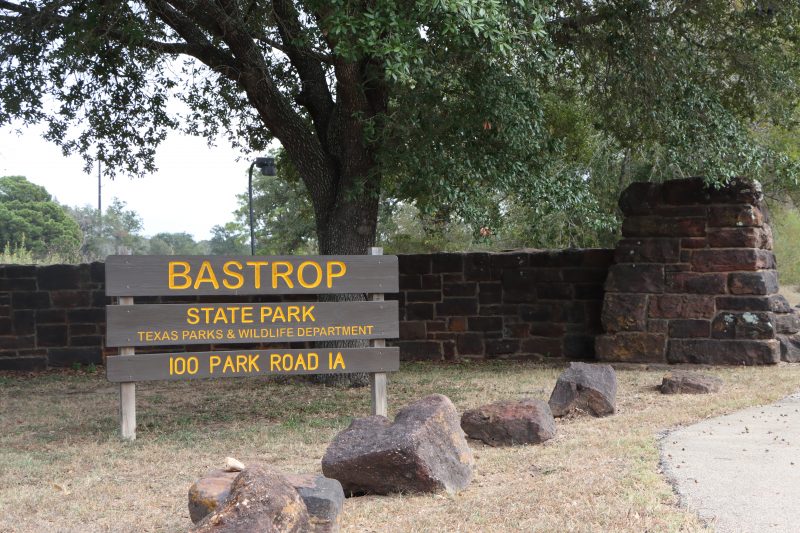
A sign marks the entrance to Bastrop State Park where forestry and fire experts are planning a proscribed burn to make the pine forest less prone to wildfires. Paul Holm/Reporting Texas
BASTROP — Nearly five years after an escaped prescribed burn forced residents to evacuate, Bastrop State Park is preparing to bring fire back to its forest, with rewritten burn plans, additional safety checks and efforts to rebuild public trust.
The return follows a pause that began after the 2022 Rolling Pines Fire, leaving staff to manage vegetation with chainsaws, machinery and herbicides while waiting for suitable burning conditions.
The Rolling Pines Fire burned more than 800 acres and forced about 250 families to leave their homes. For a community where another wildfire burned 32,000 acres over 55 days in 2011 and forced about 5,000 people to evacuate, bringing fire back to the park means more than finding the right time to burn. It means rebuilding trust with neighbors who know how much a fire can take.
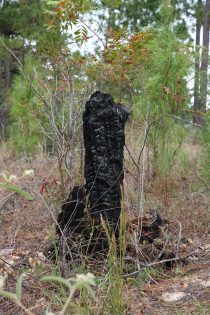
Green vegetation surrounds a charred tree trunk at Bastrop State Park. Paul Holm/Reporting Texas
For Wade Powell, fire and habitat management coordinator for the Lost Pines Complex Parks, the decision involves balancing the risks of setting a fire against the danger of letting dried vegetation accumulate.
“The decision not to manage or the decision not to burn, that’s still a management decision,” Powell said.
Officials initially targeted 2025 for the next prescribed burn, but a hot, dry winter prevented them from finding a safe window, Powell said.
For now, there is no firm ignition date, and Powell said the park would wait for the necessary conditions.
The timing now depends on rainfall, weather and the availability of personnel and equipment.
Vegetation continues growing during the pause, gradually reducing the effectiveness of previous thinning and restoration projects, Powell said.
Prescribed burns reduce brush and dead vegetation that can fuel destructive wildfires, return nutrients to the soil and create space for native grasses and wildflowers.
“There really is no replacement,” Powell said. “There’s ways to emulate it, but not a way to completely replace it.”
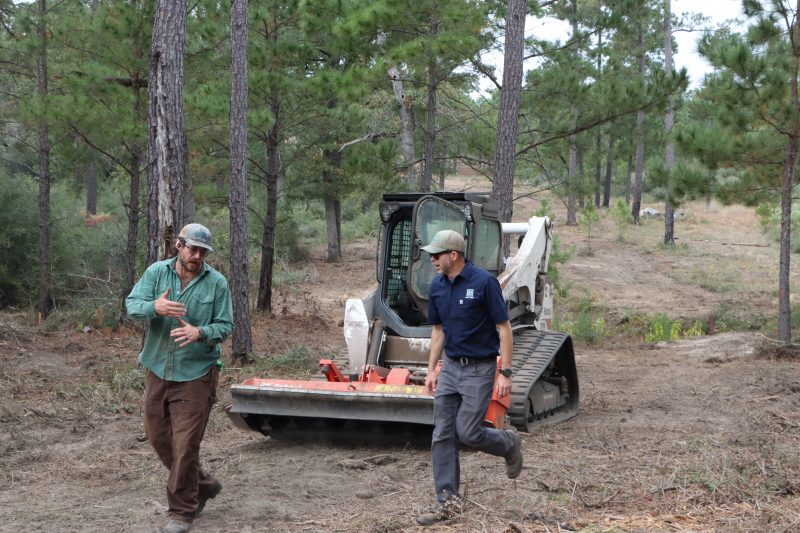
Wade Powell, left, speaks with James Aldgate beside a compact track loader at Bastrop State Park . Paul Holm/Reporting Texas
The goal is a forest where future wildfires cause less damage and firefighters have more opportunities to respond.
That distinction became clear to Powell during the 2011 Bastrop County Complex Fire, when he was working for the Texas Forest Service.
Riding in a brush truck around midnight, he watched flames that had been moving through treetops drop to the forest floor upon reaching an area treated with prescribed fire earlier that year.
“That really cemented the philosophy and the reason behind it for me,” Powell said.
But returning fire to the park also means addressing memories of the prescribed burn that escaped in 2022.
Doug Marousek, Architectural Control Committee chair for the Circle D Civic Association, remembers being asked to evacuate for a few hours during the Rolling Pines Fire.
He supports prescribed burning but said some neighbors remain nervous because they lost homes in 2011.
“In general, I think people are pretty trusting of their work,” Marousek said.
His observations, he said, come partly from neighborhood conversations and Nextdoor posts, rather than a formal assessment of community opinion.
Following the escaped fire and its review, the department rewrote its burn plans, Powell said.
One addition requires examining the time since a soaking rain, helping crews consider prolonged dryness alongside conditions measured on the day of a burn.
In 2022, crews ignited two burn units simultaneously, leaving firefighters responsible for a long fire line, according to the independent review. The panel recommended conducting smaller burns at Bastrop, even if that means burning on more days throughout the year.
“What’s the history going back?” Powell said.
Bastrop State Park and the surrounding pines have suffered two devastating wildfires in the past 15 years. Paul Holm/Reporting Texas
The revised plans spell out which crews and equipment will be working on the burn and which could provide backup if needed, Powell said. The change is meant to avoid confusion and ensure crews know what extra help is available, rather than counting on resources already committed to the burn.
Again in 2022, crews began burning before a requested bulldozer arrived, a decision the independent review criticized. TPWD now requires bulldozers to be on the fire line before prescribed burns begin in high-risk areas such as Bastrop, with operators attending the team’s pre-burn safety briefing. burn
The revised plans also set trigger points for declaring a burn a wildfire and calling for additional firefighters and equipment, helping crews decide ahead of time when to seek help.
“You can think of them as trigger points,” Powell said.
Before ignition, crews complete a checklist assessing whether conditions and resources meet requirements before setting the forest floor ablaze.
During the burn, designated crews work to keep fire within the planned area, guided by the written plan and operational thresholds.
Powell said firefighters have also gained experience through statewide wildfire assignments, while local agencies train together through structure protection exercises and mock evacuations.
The purpose, he said, is to ensure “the first time you’re meeting these people isn’t on an emergency event.”
Bastrop County Emergency Management Coordinator James Altgelt said neighboring residents receive notice of scheduled prescribed burns from park officials.
If a fire spreads beyond park boundaries, emergency officials will use the same notification methods employed during other fires.
“We would use the Regional Notification System (RNS), the Integrated Public Alert Warning System (IPAWS), social media, and going door-to-door to notify the residents,” Altgelt wrote in an emailed response to questions
A new public viewing opportunity will allow residents to watch a prescribed burn and see how crews operate, he said.
“I think transparency is a great thing,” Powell said.
“We were going to take however long it took to do it right,” he said.
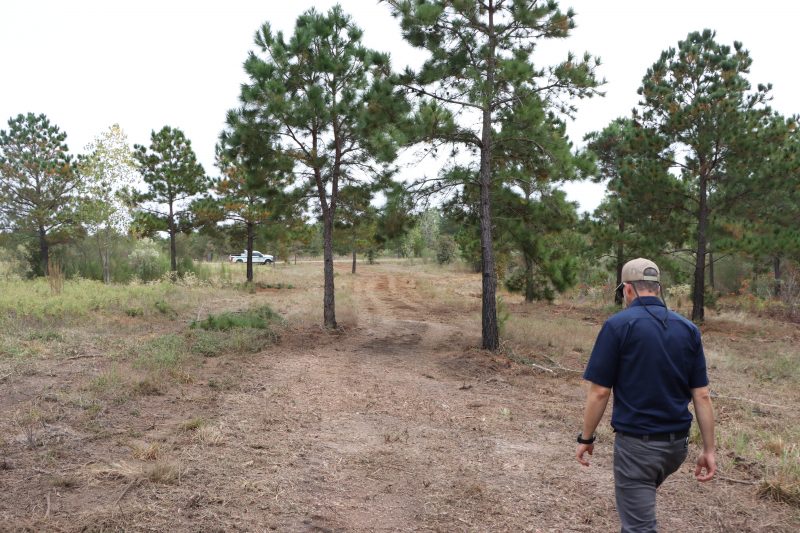
Wade Powell walks among pine trees at Bastrop State Park. Paul Holm/Reporting Texas