SNAP Recipients Decry Texas’ New Limits on Foods They Can Buy
By Destiny Lewis
Reporting Texas
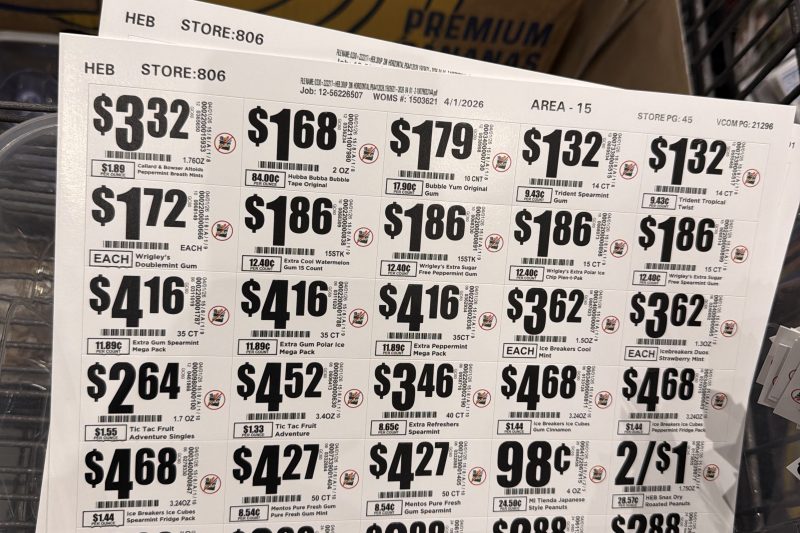
Some grocery stores, such as H-E-B, warned customers ahead of the April 1 enactment of new state policies limiting foods that can be purchased using SNAP benefits. Destiny Lewis/Reporting Texas
Candy and sugary drinks are now off-limits for Texas SNAP recipients — a change that’s fueling debate over who should decide what low-income families can buy.
Texas officials say the new policy is meant to improve public health by limiting access to certain foods, but critics argue it places additional restrictions on people already facing financial hardship.
Texas officials have defended the policy, which went into effect April 1, as a way to improve health outcomes and ensure public funds are used for nutritious food.
“By restricting unhealthy foods from being purchased with SNAP benefits, Texas can help ensure the health and well-being of Texans,” Gov. Greg Abbott said in a statement announcing federal approval of the policy in August 2025.
Senate Bill 379, approved by the Legislature in June 2025, allowed Texas to submit a “Healthy Foods” waiver to federal officials requesting permission to restrict certain items from being purchased with Supplemental Nutritional Assistance Program benefits, which are distributed via state-issued Lone Star Cards.
As part of the waiver, the state must monitor SNAP recipients and track whether the changes actually lead to healthier food choices. Supporters argue that limiting access to sugary snacks and drinks could encourage families to purchase more nutritious options.
But critics say the policy gives the government too large a role in shoppers’ choices.
“I think the government focused on the right thing for the wrong reasons,” said Aniya James, a SNAP recipient. “There should be incentives or some way to help Americans eat healthier, especially with the amount of obese individuals in America. However, I feel like the only reason they’re doing it now is to limit the amount of people who are applying for and receiving those benefits.”
Others believe the restrictions unfairly limit families who rely on SNAP benefits.
“I don’t think the government should decide what people can buy,” said Tori Davis, a SNAP recipient. “People have kids who should be able to eat sweets or drink juice just like other families who don’t need food stamps. Taking away their ability to buy snacks for their children shouldn’t be allowed.”
Other critics say the new rules push consumers toward more expensive foods that often spoil faster than packaged snacks, making it harder for families to stretch limited grocery budgets.
“Healthy food goes bad quicker,” Davis said. “Everyone knows this. I think it’s unfair, and it shouldn’t be their decision what people should eat and buy.”
Some grocery retailers prepared customers for the change ahead of the April 1 deadline. Stores such as H-E-B placed notices in their stores and within their mobile app warning shoppers about the upcoming restriction. The alerts informed customers using SNAP benefits that certain items — including candy and sweetened beverages — would no longer be eligible for purchase once the rule took effect.
SNAP, formerly known as food stamps, is designed to help low-income families purchase food. The program serves millions of Americans and is funded federally but administered by individual states. Because of this structure, states sometimes seek federal waivers to test new policies or restrictions within the program.
The debate reflects a larger national conversation about food access, health and personal choice. Some advocates believe encouraging healthier eating through education or incentives may be more effective than limiting what people can buy.
“Personally, I understand the reasoning behind it, but not everyone has the capacity or resources to get quality groceries,” said Jaiden Holmes, a SNAP recipient. “Sometimes you have to eat what’s available, even if it happens to be junk.”