Pet Vaccine Hesitancy Is About Payment Not Politics, Austin Shelters Say
By A.J. Muonagolu
Photography By A.J. Muonagolu
Reporting Texas
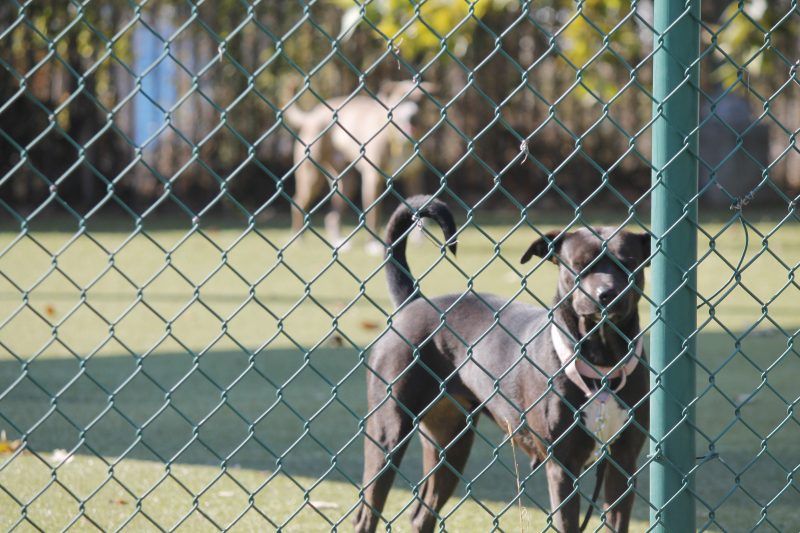
A dog at the Austin Animal Clinic waits for his turn for his morning walk. The shelter says cost, not vaccine hesitancy, keeps some owners from fully vaccinating their pets.. A.J. Muonagolu/Reporting Texas
Recent reporting implies that pet owners are worried about vaccinating their pets due to anti-vaccine fears; however, Austin’s animal shelter says the real problem is affordability.
The New York Times, Time Magazine and the American Animal Hospital Association have recently linked anti-vaccine worries that grew during the COVID pandemic to vaccination concerns among pet owners. However, Elizabeth Ferrer, marketing and communications manager for the Austin Animal Center, said the main reason pets aren’t vaccinated is lack of access to treatment, mostly driven by vet costs.
“Most people are interested in vaccinating their pets, because they believe in the efficacy of the vaccines — and at the very least are afraid of the liability of having a rabid dog,” she said.
The most important vaccines for dogs are rabies, parvovirus and distemper. Cats need vaccines for rabies, feline panleukopenia and feline leukemia. Pet vaccinations range between $15 to $100 per dose, with most requiring one or two doses.
It adds up.
Dr, Gina Bowen, lead veterinarian at Levander Loop Emancipet — an Austin clinic that offers low-cost veterinary services — said there aren’t enough resources to provide care and education. She said she hasn’t worked with any owners worried about the safety of vaccines on their pets.

Dogs like Hero at the Austin Animal Clinic are required to be up to date on their vaccines. Veterinarians say cost is a primary reason that owners sometimes forgo vaccinating their pets. A.J. Muonagolu/Reporting Texas
“There’s a shortage of vets, and prices have gone up,” Bowen said. “Emmancipet is a high-volume, low-cost clinic, but sometimes on the weekends or during the summer we just have lineups of people and we literally can’t see the people in our line during the day.”
Prices are also higher since some vaccines, like the rabies vaccine, can require an office visit to check the pet is healthy before they are vaccinated, which is a separate cost.
“If I tell you that your puppy needs a parvo-distemper vaccine, but the puppy isn’t sick, it’s hard to relay that information in a way that makes sense,” Bowen said. “ It takes education sometimes to relay the importance of preventative medicine, because it’s not an outright benefit you see.”
But leaving a pet unvaccinated pet can be costly, too: it can lead to a Class C misdemeanor and result in civil fines ranging from $100 to $1,000, among other offenses.
Ferrer said if the animal bites another person, the Austin Police Department can get involved, leading to criminal charges against the owner.
Ferrer said Austin Animal Services offers vouchers for low-income individuals to vaccinate their pets. Emmancipet also offers discounted rates to support pet vaccinations and accessibility.
“We go around different parks within the city and offer vaccines on Fridays and Saturdays right now,” Bowen said.
Unvaccinated pets also affect Austin’s no-kill rate. Austin’s “no-kill” status means that 90% of animals at Austin Animal Shelter are transferred, adopted or returned to their owners; the Austin Animal Shelter tries to maintain a 95% no-kill status.
Bowen said unvaccinated pets can lead to spread of rabies and subsequently lead to euthanization of more animals.
Vaccinations also protect people. Rabies is transferable to humans through contact with saliva of an infected animal.
Ferrer says animals that don’t bite can still transfer rabies if they lick their paws and then scratch a person. It can also be transferred if people touch infected saliva and then they touch their face.
Bowen said promoting pet health enhances community health.
“If animals are suffering, the people will suffer,” Bowen said. “If we are not doing our job to keep those pets healthy, then it’s damaging to the human-animal bond, and it’s damaging to people mentally, financially and all those things.”
Financial struggle shouldn’t stop pet ownership, Ferrer said. Even though the agency is over capacity, they will try to find resources for anyone trying to keep a pet healthy.
“Every person who wants to own a pet should own a pet,” Bowen said. “If you want to be a good pet owner, anybody can be a good pet owner — even if you don’t have all the money in the world.”