Austin Officials Warn of Rising Wildfire Danger as Dry Weather Continues
By Zach Cook
Reporting Texas
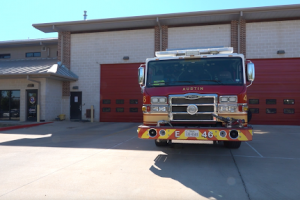
A fire truck sits outside Austin Fire Station 46 on Nov. 4, 2025, as crews prepare for heightened wildfire risk across the region. Zach Cook/Reporting Texas
Months of below-average rainfall have pushed Austin into a stretch of dry weather that officials worry could lay the groundwork for wildfires. Austin and Travis County issued preemptive disaster declarations on Oct. 20 after watching vegetation dry out and winds increase. Fire crews say the move is meant to get ahead of any outbreak rather than wait for one to happen. Meteorologist Mike Iscovitz says the shift in weather conditions has happened faster than many people realize.
“We have gone from extreme, historic flooding… to now a drought. The rain that fell during the spring actually encouraged the growth of a lot of vegetation that then dried out when the drought kicked in, creating an overgrowth of fuel for wildfires,” Iscovitz said.
He explained that when humidity drops and winds pick up, even a small spark can turn into a fire that moves quickly. These fires often begin from everyday activity, and even something as small as a cigarette butt can spark a wildfire.
“If you already have dry vegetation, that so-called fuel, and then you combine that with really low humidity and gusty winds, if anything sparks, it can spread very quickly and become difficult to fight,” Iscovitz said.
The concern in Austin is growing, partly because the city now ranks fifth in the country for the number of homes at risk of wildfire. Neighborhoods that border open land, such as Westlake or areas around Southeast Austin, are watched closely by fire officials. Still, experts say risk is not limited to people who live near wooded areas.
Crews at Station 46 are preparing for what they expect could be a challenging season. The fire department has brush trucks ready for rugged terrain and staffs four strike teams that focus entirely on wildfire response. Much of their work happens before any flames appear, and a large part of that effort centers on helping residents understand how to protect their homes.
Chris Dibrell, who coordinates Fire Adapted Communities for the city, says the goal is to make people aware of the real threat.
“As the fire deputy of communities, we are wanting to inform people and help them prepare their homes and their structures for a potential wildfire,” Dibrell said.
He says the biggest danger is often not the fire line itself but the embers that travel ahead of it.
“Ninety percent of the homes that burn due to a wildfire are from ember production and embers can fly up to a mile and a half from their place of origin. Just because you do not live on the edge of the city in a wildland-urban interface does not mean you aren’t threatened by wildfires or embers,” Dibrell said.
Dibrell says that homeowners can reduce risk by clearing vegetation that sits close to the house and by preparing the structure for flying embers.
“What people can do is harden their homes. Remove vegetation zero to five feet from the actual structure itself and then make sure their homes are prepared for possible embers,” Dibrell said.
He also reminds residents to stay on top of routine maintenance.
“It is important for residents to clean their gutters as the dry dead leaves are easy to catch fire,” Dibrell said.
The fire department offers a free structural ignition zone evaluation where officials walk homeowners through steps they can take to reduce risk. Residents can schedule one by calling 311. Dibrell describes the service as a chance to give people clear, practical information they can use before fire season peaks.
In Westlake, one of Austin’s highest risk for wildfires zones, the danger feels personal for many residents. Resident Luke Manos says he has paid closer attention than most to wildfires since moving to Texas from California.
“It is pretty scary. I grew up in Southern California so there were many instances where we had to evacuate the area because of large wildfires, so my first instinct is to take it pretty seriously,” Manos said.
He added that during the hottest months, people tend to pay closer attention to what they do outdoors.
“In the summer months, I kind of feel like everyone has their head on a swivel and is pretty cautious about what they do,” Manos said.
Right now, statewide wildfire risk is considered low to moderate. That could change quickly if the dry weather continues and humidity stays low. Iscovitz says once vegetation dries out, fires can erupt with little warning.
“If we could just raise everybody’s awareness about the hazards of wildfires and the damage that they can do to people and property, then maybe people will be more aware and will not do things that could spark the next fire,” Iscovitz said.
Officials urge residents to remove dry plants from around their homes, clean gutters, avoid burning on windy days and consider scheduling a free home evaluation. They say preparation now is the strongest defense, because in Austin’s current conditions, a single spark is enough to start a disaster.