From UT to the Moon: How Judd Frieling Launched the Journey of a Lifetime
By Rachel N. Madison
Reporting Texas
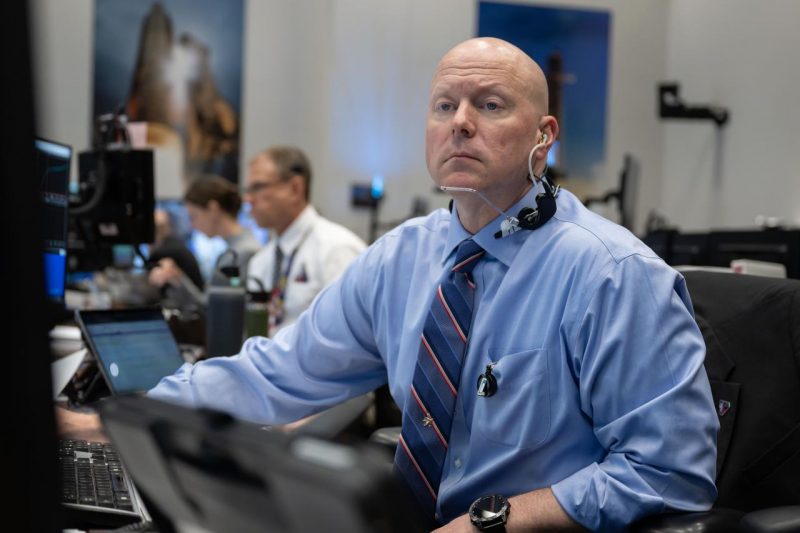
University of Texas graduate Judd Frieling served as the Artemis II lead flight director for ascent. NASA photo
Years before Judd Frieling was a NASA flight director for the Artemis II mission, he was a University of Texas aerospace engineering student with plans to go into the Navy. The Navy rejected Austin-born, Pflugerville-raised Frieling, however, because of his “droopy eyelids.”
“They told me, ‘You can’t fly planes,’ ” Frieling said.
So, he shifted his sights — to spacecraft.
After graduating in 1996, the Longhorn went on to become a flight controller for the international space station at NASA. He later worked on shuttle programs, which ended in 2011. The space agency chose him as a member of the mission control team at the Johnson Space Center in Houston in 2013 to usher in the new wave of space exploration.
Most recently, he served as flight director for the Artemis missions where he guided the ascent for Artemis II’s Orion Spacecraft’s journey around the moon and back.
Growing up in the post-Apollo era, Frieling said he was inspired by NASA’s innovation and capabilities but never expected it to turn into a career. At UT, he was able to take a course by former NASA official and researcher Hans Mark and was hooked on all things space.
“NASA has always been ubiquitous in that you’ve seen NASA do things that seem impossible,” he said in an interview with Reporting Texas. “I never would have in a million years expected that I would get to be a part of a mission going back to the moon.”
While he was always fascinated with space exploration, he said many of the skills he uses every day surprisingly came from other hobbies and experiences, not formal training.
“I started freshman year in high school in band and ended up being in the UT band and was drum major last year,” he said. “I credit a lot of that for being able to work with a team, build relationships with a huge amount of people and be on the same page.”
This has helped him forge the same meaningful — and in this case, life-critical — relationships and trust at NASA, he said. As a flight director, Frieling is responsible for managing a team of flight controllers, researchers and engineers during the ascent phase of spaceflight missions, where he must collaborate and make quick decisions to keep astronauts safe and troubleshoot.
The importance of foundational skills also apply for the missions themselves, he said.
“Everything is a building block, and you gain experience from doing it,” he said, referencing the importance of past missions, both successful and devastating, for learning and growth. “We build upon successes and past learning events,” to make sure they get it right when it matters.
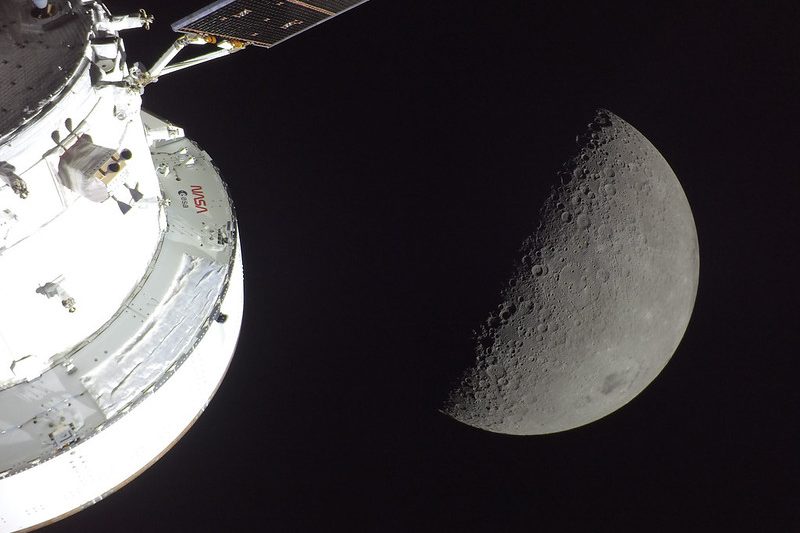
NASA’s Orion spacecraft is seen in the foreground, lit up by the Sun. A first quarter Moon is visible behind it, with sunlight coming from the right. NASA photo
This is no easy feat when you are shooting a rocket with four astronauts into space.
“We did hundreds of simulations with the team for ascent and entry portion” before flight day, Frieling said.
The practice becomes essential so that you account for complications before the real scenario, which Frieling said reminds him of band practice before a big game.
“Actual flight day was not a problem at all,” he said. “After we splashed down and handed over control to recovery forces, there was a pretty big sigh of relief.”
The team later held a splashdown party after Navy divers and sailors rescued the astronauts to celebrate the historic moment.
Frieling admitted that space education may look quite different than his classrooms in the ‘90s. UT has adjusted and expanded course offerings in automation, robotics and computational methods to account for rapidly changing technology and systems, said Clint Dawson, chair of the aerospace engineering department.
“Aerospace has changed a lot in the past decade,” Dawson said. “The privatization of the industry has changed the landscape,” along with the growing role of automation and AI. “Students should get access to a broad range of technologies and fields, because the focus now is on space exploration, but it may change in five years.”
The NASA flight director said he doesn’t yet see automation playing a large role for space flight.
“You need real-time control of missions for obvious reasons,” he said. “Tech isn’t proven to make sound decisions that humans would make at this time,” although he does see the potential for its implementation in longer missions into the future.
For now, he joked, AI is, as in other fields, largely used for performance appraisals.
Regardless of changing technology, Frieling believes the heart of the career remains the same. He hopes that current students are inspired by recent missions just as he was years ago and remember to follow their passions “above all,” no matter what form of aerospace they may enter.
“Don’t do things you think you have to do because it’s on some checklist,” he said. “Do things you like to do.”
It is this passion that has motivated his work over the past 30 years and will continue to bring him back to the control room for many years and missions to come as NASA’s upcoming missions work to establish a sustainable presence on the moon and, eventually, Mars.
The veteran officer said he still gets a rush when making big decisions with his team in the control room. The responsibility and magnitude of the role “is really exciting,” he said.
With a laugh, Frieling put it humbly: “It’s like parents giving you the key to the car.”