For Austin Air Traffic Controllers, the Shutdown Is Over But the Fatigue, Shortages Persist
By Erika González
Photography By Erika González
Reporting Texas
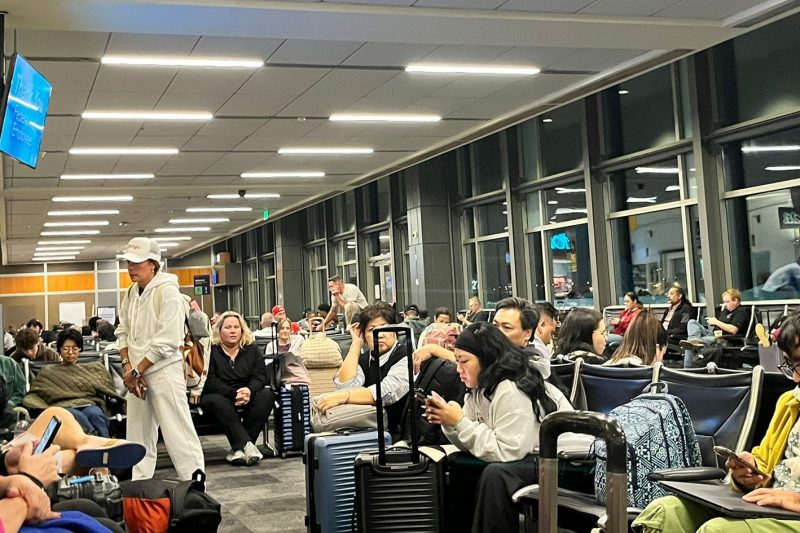
Passengers at Austin-Bergstrom International Airport wait for their flight to Houston. ERIKA GONZALEZ/REPORTING TEXAS
During the longest government shutdown in U.S. history, Austin-Bergstrom International Airport continued operations — but the control tower felt the impact.
With fewer air traffic controllers available, every decision became more critical and the pace of work intensified, controllers say. Even after the shutdown ended, risks of ground delays and controller fatigue remain.
“We are shortstaffed, managing a constant flow of arrivals and departures and working with traffic levels that really don’t match the number of people we have. So working becomes increasingly difficult,” said one Austin air traffic controller, who asked to not be identified because he is not authorized to speak to the media.
The FAA had planned to reduce flights at Austin-Bergstrom by 10% to manage limited staffing during the shutdown, but it temporarily scaled back that reduction to 6% in response to ongoing operational challenges. Despite the smaller reduction, staffing shortages continued to disrupt daily tower operations.
“Austin is not a quiet airport,” said one of the air traffic controllers at Austin airport. “It is busy, growing faster than the system can handle, and we are the ones who feel the consequences every day.”
Life in the tower: Chaos and low staff
The Austin tower operates with 29 certified controllers, compared with the 60 recommended by the FAA, representing only 48% of the necessary staff, according to the agency’s Air Traffic Controller Workforce Plan.
It is not alone.
“Right now we are facing a shortage of controllers, and this was already happening even before the government shutdown,” said Chad Kendall, a former commercial airline pilot and current aviation professor at Metropolitan State University of Denver. “We have reached a point in the system where air traffic control remains safe but very fragile. It works day by day, but there is almost no margin in the system to absorb disruptions.”
Even without a shutdown, a typical day in the tower is “a mix of organized chaos,” one Austin air traffic controller said, “and doing 10 things at once while pretending it’s normal.”
The controller said they must be prepared to perform different roles within air traffic control every day, such as gathering information on incoming and scheduled flights while at the same time issuing clearances to aircraft with precise routes, altitudes and speeds.
“The lack of staff affects almost every part of daily operations in Austin,” one controller said. “There is no margin in the system, and Austin is too busy an airport to operate halfway.”
To address this deficit, the FAA presented a staffing plan through the end of fiscal 2028, aiming to hire 8,900 new air traffic controllers and strengthen their training. However, because of current controller retirements and attrition among new recruits, the same study projects that only about 1,000 additional certified controllers will be added by the end of that period.
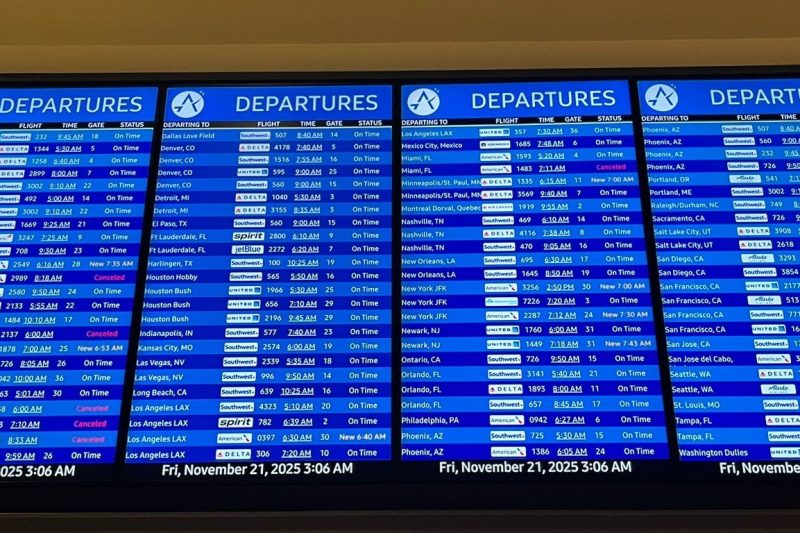
Every day is a busy day for air traffic controllers in Austin. They tell of long shifts with an understaffed control tower at an airport that continues to increase in traffic. ERIKA GONZALEZ/REPORTING TEXAS
Long hours, mental fatigue
Austin air traffic controllers say they struggle with the constant mental load of the jobs’ demands. “Traffic in Austin is intense and unpredictable, so you’re always thinking ahead and solving problems before anyone else notices,” a controller said.
Shifts alternate between mornings and nights and usually last eight to 10 hours, with breaks of only about 30 minutes. While the hours themselves are not the main issue, the lack of recovery time and insufficient breaks create constant stress and fatigue, the workers say.
“It’s mentally heavy and you leave feeling like you did three jobs in a single shift. But you show up and do it because if you don’t, no one else will,” said one controller.
A report from the National Academies of Sciences, Engineering and Medicine, an independent advisory institution for Congress since 1863, found that overwork and lack of rest are well known risk factors in aviation.
“The system operates 24 hours and controllers rotate between day, evening and night shifts,” said Bill Strickland, former head of the Human Resources Research Organization and chair of the committee that wrote the report. “They have made some interim changes, like ensuring certain rest hours between shifts, which is positive, but the main issue is changing the schedule itself.”
Workload pressure is compounded by economic stress. During the government shutdown, controllers worked without pay. Some received partial payments, but others had to find a second job to get by, increasing stress.
“We haven’t had a significant pay raise in more than a decade, while the cost of living in Austin has risen quickly,” one controller said. “This adds another layer of pressure on people already working in a high-stress environment. It doesn’t mean controllers are doing anything wrong.”
The same controller said that the newly hired controller in the area earns around $120,000 to $122,000 a year, roughly $59 an hour. He said that while the salary may sound high, it comes with a level of responsibility and security few other jobs demand.
“People assume the pay makes the stress worth it, but it doesn’t go away. You’re responsible for lives every minute you’re working,” he said.
Limited training for prospective controllers
Contributing to the shortage of controllers in Austin is a lack of training programs here. Prospective air traffic controllers in Austin must move to other cities to train at the FAA Academy in Oklahoma or at certified centers, delaying the addition of new staff.
The situation worsened when Texas State Technical College, the only public university in the state offering such training, suspended its air traffic controller program in 2014.
In June the Austin City Council urged the FAA to prioritize staffing at the Austin airport and improve communication about staffing impacts.
The project, led by Council Member Vanessa Fuentes, also explored creating an air traffic controller academy as part of the city’s efforts to address the staffing crisis. Fuentes declined an interview request.
In a statement sent to Reporting Texas, the FAA said the agency has increased nationwide in person training capacity by nearly 30%, reaching a record number of students in August, with more than 600 trainees at the same time.
The FAA is also working with qualified institutions to help students enter air traffic facilities faster and start working.
Doug Mitchell, head of aviation at Nashua Community College in New Hampshire, said students are interested in the career, but training comes with a high cost.
“The program is expensive to operate. Each student needs an instructor during simulations, and the equipment is very costly. We need funds to grow, improve and expand our service,” Mitchell said.
Austin air traffic controllers say expanding training is crucial, but it won’t immediately relieve the daily pressure they face.
“Our work matters because we hold the system together, especially during holidays,” one controller said. “When we do our job well, everything looks smooth from the outside. When we’re not there, the whole operation quickly falls apart.”