Austin Keeps Day of the Dead Alive
By Saile Aranda
Photography By Saile Aranda
Reporting Texas
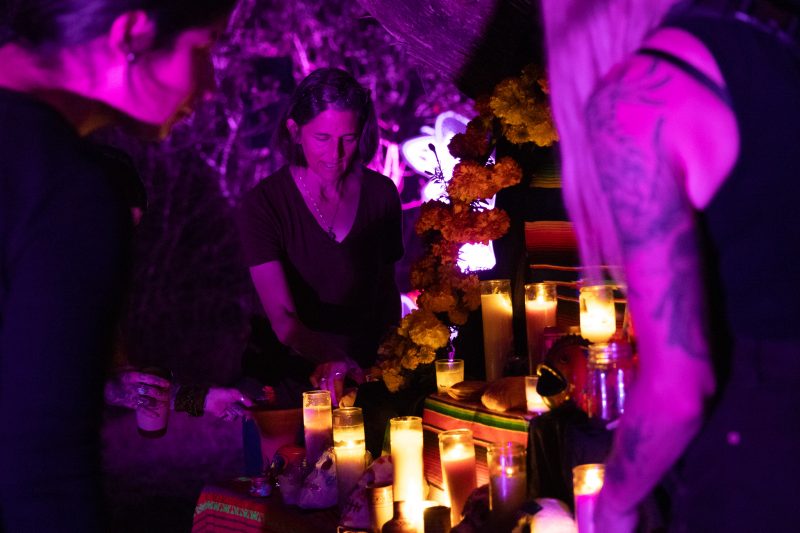
Coty Velasquez helps decorate the altar at the San Jose Cemetery II for the Day of the Dead celebration. Saile Aranda/Reporting Texas
Burning candles and bright orange marigolds decorate San Jose Cemetery II as guests walk through the smoke of copal incense on the Day of the Dead, a Mexican tradition celebrated annually on Nov. 1 and 2 for more than 3,000 years.
Joaquin Rodriguez, founder of San Jose Montopolis Cemetery Association, said he thinks these traditions have been happening for so long because it’s a way of having a common language within the community.
Rodriguez, who was adopted, said he always felt connected to Mexican culture although it was never practiced in his home. As an adult, he sought out connections to his birth family and ancestors, which helped him find his heritage.
“That creates a strength that is unparalleled, because we all seek cultural identity,” he said.
“It’s just, are you inventing one? Are you adopting into one or do you have one that’s awaiting you to find?” he said.
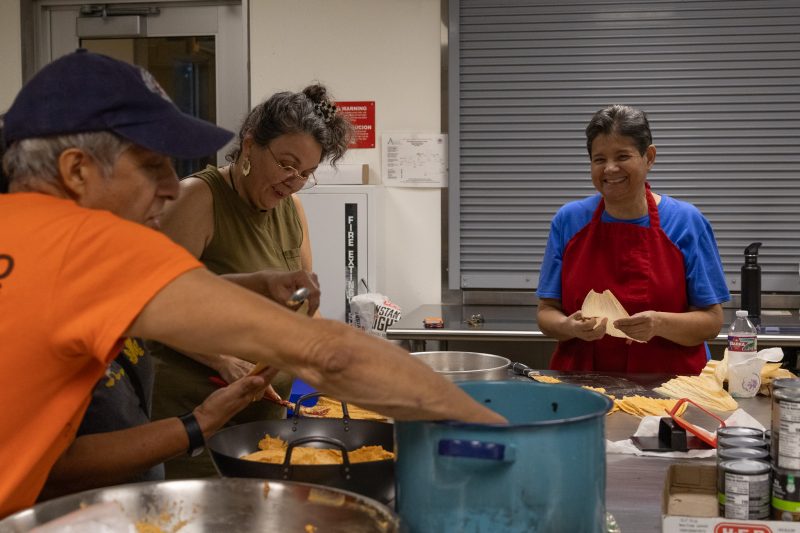
Joaquin Rodriguez, Valerie Ruiz and Lily Flores spread tamale masa on the corn husks during the tamalada event at the Montopolis Community Center before Day of the Dead ceremonies. Saile Aranda/Reporting Texas
Rodriguez and volunteers have worked for the past five years to preserve Austin’s Mexican-American history by cleaning up the cemetery, which is near Austin-Bergstrom International Airport. San Jose Cemetery I and II, established in the early 1900s, served as a burial ground primarily for the Latino and Mexican community.
He found the cemetery through his journey of finding family members buried in Texas grounds. The property, once covered in foliage, now holds a traditional Day of the Dead ceremony, with live music, Mexican food and ritual dances that honor all of the people buried there.
Some attendees of the celebration Sunday did not grow up with the tradition. Lisa Dawson said she discovered Day of the Dead when working at a school in Austin.
“I really like the way this celebration reached out to non-Spanish speakers and people without a Hispanic background.” said the former second-grade teacher.
Sara Zamarripa, who accompanied Dawson, said she was intrigued by the concept of a hidden cemetery and hoped to hear her last name mentioned during the burial name call outs.
“I think it’s still here because it’s evolved,” she said. “There is always a little piece of history that gets woven into the new thing. You can say, ‘This is the Spanish part and this is Indigenous.’ It’s been mixed together for so long but it keeps it going.” said Zamarripa.
Food was a significant part of the celebration. Families of those buried in the cemetery cooked the deceased’s favorite meals and included them in their altars. Traditional foods served on both days included red pork or chicken tamales along with pan de muerto, a fluffy and sweet mexican bread with a hint of orange zest and sugar sprinkled on top.
The San Jose cemetery association hosted a tamalada at the Montopolis Community Center before the celebration to prepare more than 20 dozen tamales to give out to attendees on Sunday.
A group of volunteers gathered at the community center to prepare the masa, filling and wrapped tamales for about four hours, learning from each other and telling family stories.
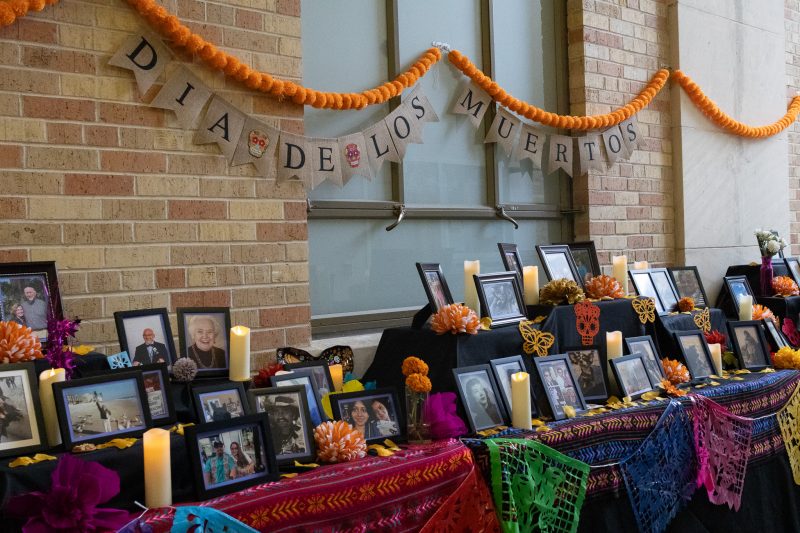
A Día de los Muertos Community Ofrenda displays at UT Austin’s Gordon-White Building. The altar is made up by photos of pets and family members of students. Saile Aranda/Reporting Texas
Members of the Social and Cultural Analysis Department from the University of Texas at Austin hosted a celebration on Nov. 2 displaying a community altar at the Gordon-White Building. Framed photos of pets and family members of students filled the decorated tables in the hallway.
The new Social and Cultural Analysis Department is a consolidation of the African, Mexican, Latino and gender study departments announced by UT President Jim Davis at the beginning of this year.
Professor Nicole Ramsey from the department said she thinks it’s important to continue showcasing culture and heritage traditions to students. She said the program is not just about students learning in classrooms but sharing information about their peers and their cultures.
“I think it is fascinating and important that regardless of all of these cuts and the undermining of these spaces and these departments, we’re able to bring folks together and still have this for the students,” Ramsey said.
“Even though we’re in a time where everything is being cut, we are making a statement to continue to show up for these things.”
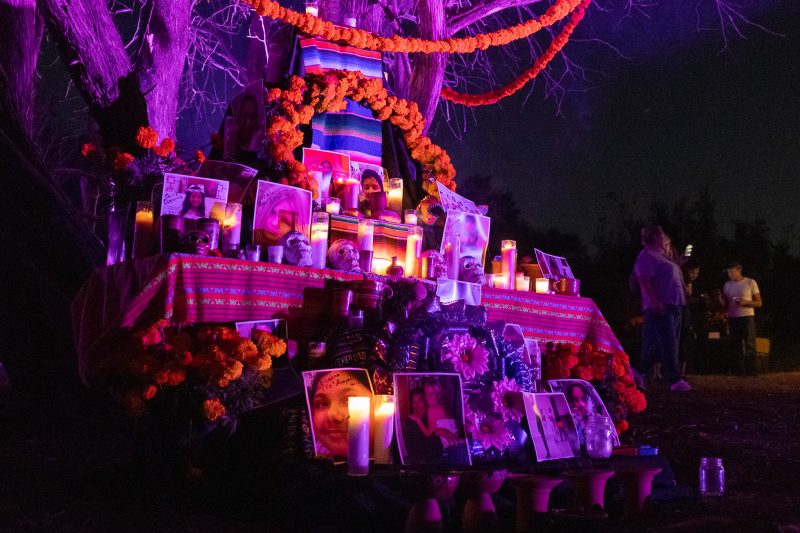
An altar display at the San Jose Cemetery II for a Day of the Dead celebration. Saile Aranda/Reporting Texas